

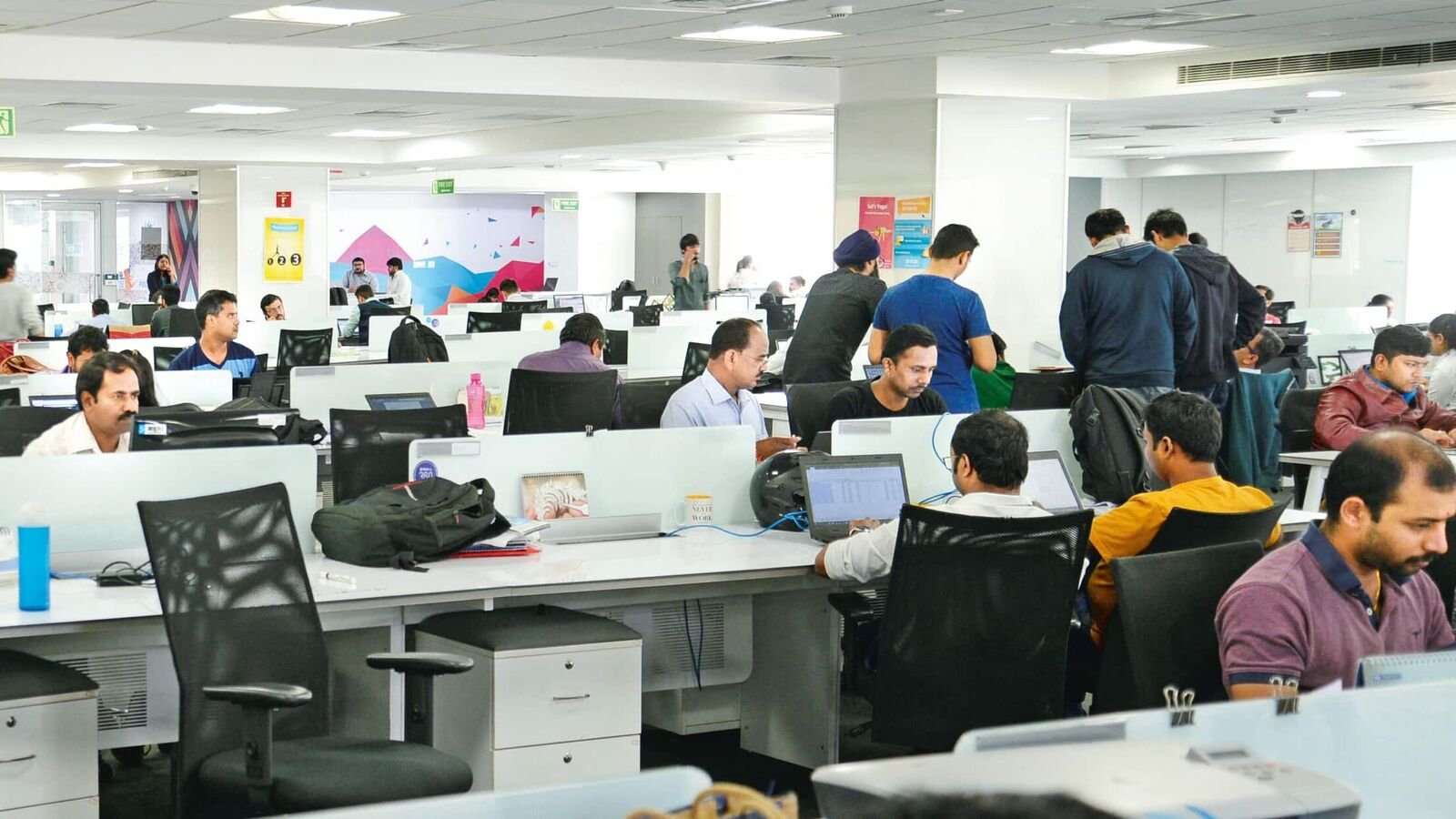

As generative AI reshapes software development, India’s US$280 billion IT industry is proving more resilient than many expected. Instead of replacing engineers, AI is redefining the services global enterprises are willing to pay for. For nearly three decades, India’s IT services industry has thrived on a simple formula: provide skilled engineering talent at scale, build software for global enterprises, and continuously optimise costs.
Then came generative AI. When OpenAI launched ChatGPT in late 2022, predictions of mass job losses quickly followed. AI coding assistants capable of writing software in seconds led many analysts to question whether India’s technology outsourcing model was under threat. If software could write itself, would enterprises still need thousands of engineers?
Nearly four years later, the answer appears to be far more nuanced. Rather than collapsing under the weight of artificial intelligence, India’s IT sector is undergoing one of its most significant transformations since the rise of offshore outsourcing in the 1990s.
A US$280 Billion Industry Faces Its Biggest Disruption
India’s technology services industry generated more than US$280 billion in revenue during FY2025, contributing around 7–8% of the country’s GDP and employing well over 5.8 million professionals directly. It remains one of India’s largest export sectors, with North America and Europe accounting for the majority of demand.
The country’s leading technology companies—including Tata Consultancy Services (TCS), Infosys, HCLTech, Wipro and Tech Mahindra—continue to serve thousands of enterprise customers worldwide, delivering everything from application development and cloud migration to cybersecurity and business process transformation.
However, AI is changing the type of work clients are buying. Routine programming tasks that once required teams of junior developers can now be completed significantly faster using AI coding assistants. Documentation, testing, debugging and code generation have become increasingly automated. Instead of reducing demand altogether, enterprises are redirecting spending toward higher-value services.
From Writing Code to Solving Business Problems
For years, IT vendors competed on the size of their engineering workforce. Today, competitive advantage increasingly depends on who can deliver AI-driven business outcomes. Enterprises are investing in agentic AI, intelligent automation, enterprise copilots, cloud modernisation, cybersecurity, data engineering and AI governance rather than simply outsourcing software development.
As a result, India’s IT majors are repositioning themselves as AI transformation partners rather than traditional outsourcing providers. Several have announced thousands of AI-focused client engagements, launched proprietary AI platforms and invested heavily in employee upskilling.
The shift represents more than a technological upgrade—it is a fundamental change in the business model.
Productivity Is Rising—Not Falling
One of AI’s biggest impacts has been software engineering productivity. Developers now use AI assistants to generate boilerplate code, identify bugs, write documentation and suggest architectural improvements. Tasks that previously consumed several hours can often be completed in minutes.
For enterprises, this means projects can be delivered faster. For IT service providers, however, higher productivity creates a new challenge. Traditional outsourcing contracts were often based on the number of engineers assigned to a project. As AI enables fewer developers to accomplish the same amount of work, service providers must increasingly shift towards outcome-based pricing rather than billing by headcount.
This transition may ultimately prove more disruptive than AI itself.
Entry-Level Hiring Is Feeling the Pressure
While experienced AI engineers remain in high demand, entry-level recruitment has slowed across much of the industry. Historically, India’s IT sector hired hundreds of thousands of fresh graduates each year, many of whom spent their early careers performing testing, maintenance and basic software development.
These are precisely the tasks AI now performs most efficiently. As a result, employers are becoming more selective, prioritising candidates with AI, cloud, cybersecurity and data science skills over general programming knowledge.
Universities are also revising curricula to include generative AI, prompt engineering, machine learning and responsible AI development, reflecting changing industry requirements.
India’s Talent Advantage Remains Intact
Despite rapid advances in AI, India’s greatest strength remains its engineering talent. The country produces hundreds of thousands of engineering graduates annually and possesses one of the world’s largest pools of software professionals.
More importantly, enterprises implementing AI rarely require technology alone. They need consultants who understand industry processes, regulatory requirements, legacy systems, cybersecurity, cloud infrastructure and organisational change.
These are areas where human expertise continues to deliver significant value. Rather than replacing consultants, AI is increasingly becoming another tool in their toolkit.
Government and Industry Are Accelerating AI Adoption
India is also making substantial investments in domestic AI capabilities. The IndiaAI Mission, backed by an allocation of more than Rs. 10,000 crore, aims to strengthen the country’s AI ecosystem through expanded computing infrastructure, indigenous foundation models, startup support and AI research.
The government has also approved multiple indigenous AI model initiatives and Centres of Excellence designed to accelerate innovation across sectors such as healthcare, agriculture, education and manufacturing. These efforts are expected to increase demand for AI expertise while reducing dependence on overseas infrastructure.
The Next Decade Will Look Very Different
The winners in India’s next technology chapter are unlikely to be those with the largest workforce. Instead, success will depend on how effectively organisations combine human expertise with artificial intelligence. Routine coding will increasingly be automated.
Software engineers will spend less time writing repetitive code and more time designing systems, validating AI-generated outputs, solving business problems and building intelligent applications. For IT service providers, revenue growth will come less from expanding headcount and more from delivering measurable business outcomes powered by AI.
Reinvention, Not Replacement
Artificial intelligence has unquestionably changed India’s IT industry. It is reducing demand for repetitive work, reshaping hiring patterns and forcing companies to rethink decades-old business models.
Yet the industry’s core strengths—engineering talent, enterprise expertise and large-scale delivery capabilities—remain highly relevant. History shows that India’s IT sector has successfully navigated multiple technology transitions, from client-server computing and Y2K remediation to cloud computing, digital transformation and cybersecurity.
Generative AI represents another inflection point. The companies that embrace AI as a productivity multiplier rather than viewing it as a threat are likely to emerge stronger, more profitable and better positioned for the next era of enterprise technology.
Far from signalling the decline of India’s IT industry, artificial intelligence may ultimately become the catalyst for its most important reinvention yet.
